| Back to Genre | Biography | Interview |
 |
|
 |
Rating: Great |
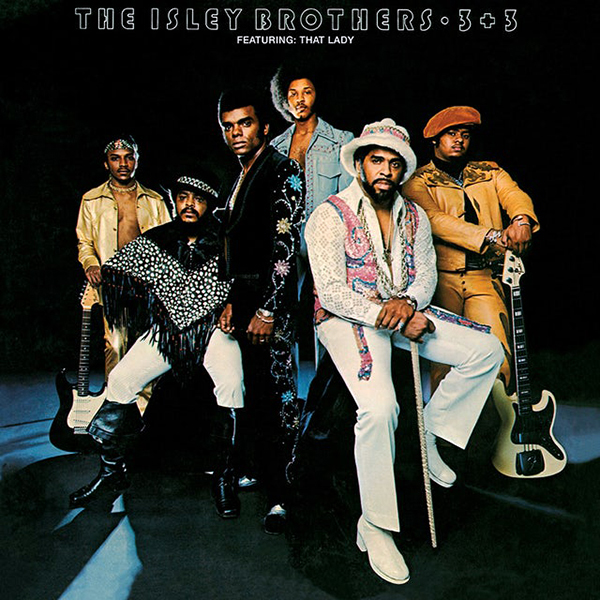
3 + 3 is perhaps the most stripped-down commercial soul album of its era. Given the dominant production styles of early '70s R&B—particularly the slick perfectionism of Motown and the Gamble/Huff Philly soul machine—this album stands out for its raw sound, like a thrash band at the Apollo. No syrupy string arrangements, no layers upon layers of overdubbed vocal harmonies, just the sound of a damn good R&B band capturing its music as it was meant to be heard. And that's another crucial factor—that the Isleys were a band (and a relatively new one at that, as guitarist Ernie and keyboardist brother-in-law Chris Jasper had joined the band only a few albums prior to this one), not just a singer or vocal group backed by an endless procession of studio musicians. The level of interaction achieved by a group of players who rehearse regularly and have arranged the songs based on their strengths is clearly evident, making for a truly unique production aesthetic.
Ernie Isley is the missing link between Eddie Hazel and Prince. In the vein of Black guitar virtuosos, Ernie Isley's work on 3 + 3 is a direct link between Eddie Hazel's acid-tinged Funkadelic shredding and Prince's pop-tempered extended jams. Whether he's indulging in fuzzed-out ecstasy on the codas of "That Lady" and "Summer Breeze" or adding almost highlife acoustic fills to "Listen to the Music," Ernie's guitar is the transcendental force that propels this album beyond its peers. While it certainly wasn't the norm at the time for a pop-oriented R&B band to have such a flamboyant guitarist, it's important to remember that these are the same Isley Brothers who, as far back as 1964, employed the services of a young Jimi Hendrix (back when he was still a budding genius calling himself Jimmy James) – testament to the older Brothers' ability to know a good guitarist when they hear one.
The covers. Nearly half of 3 + 3 is made up of covers, and from the most unlikely sources for an R&B band of this era. James Taylor? The Doobie Brothers? Seals & Crofts?!? Not only were they stylistically at odds with the Isleys’ working methods, but at the time of recording, the songs weren’t even full-fledged hits. Even more astonishing, however, is the way the band doesn’t just cover these songs, they make them their own—in other words, the feeling and consistency the Isleys inject into them (a trend they began exploring in earnest on 1971’s militant “Givin’ It Back”) makes almost anyone unfamiliar with them mistake the Brothers’ versions for the originals. Taylor’s “Don’t Let Me Be Lonely Tonight” is reworked into an aching soul ballad, with Ronald’s heartfelt vocals shining through; While the Doobies' "Listen to the Music" and Jonathan Edwards' "Sunshine (Go Away Today)" are a hundred times funkier than their predecessors, Ernie's jaunty guitar carrying the torch through both tracks. The most stunning blow, however, is what the Isleys do with "Summer Breeze," giving Seals & Crofts more credibility than they ever deserved, while Ernie once again shreds the AM turntable into little more than sawdust.
And that's just scratching the surface, the most easily distilled characteristics, if you will. The originals are just as strong as any of their past hits—"It's Your Thing" notwithstanding—with "That Lady" successfully updating their '60s hit "Who's That Lady" and "If You Were There" and "You Walk Your Way" offering mid-tempo contrasts between the funk and the ballads. And speaking of ballads, the Isleys even pull off that rarest of feats with the closer "The Highways of My Life"—a mellow R&B number that's not the least bit corny. And for those unfortunate souls who haven't yet had the pleasure of experiencing 3 + 3, hopefully the preceding praise will encourage you to do so with minimal hesitation.
= Full Album Play List =
= Track List =