| Back to Genre |
 |
|
 |
Rating: Great |
In 1962, an album was released that would revolutionize the musical world. Ray Charles, the emperor of soul and rhythm & blues, took an unexpected dive into the country and western repertoire—a genre where, as a Black artist in segregated America, he initially seemed to have little business. But what he did with it was nothing short of a revolution.
From the album's very first notes, you sense something special is happening. Ray Charles transforms songs like "Bye Bye Love" and "You Don't Know Me" into warm, soulful renditions that transcend their original context. He makes the music completely his own. His voice is raw, emotional, and powerfully expressive—he sings as if he's lived every word himself.
What makes this album so special isn't just the genre-blending, but the way Charles does it. He embraces the country tradition but injects it with his own musical vocabulary: gospel choirs, jazzy horns, and strings you wouldn't expect from a honky-tonk song. And it works. Every track vibrates with emotion, musicality, and courage.
"I Can't Stop Loving You" became a global hit, but it's just the tip of the iceberg. Even in lesser-known songs, you can hear the finesse: the meticulous arrangements, the space the production gives Charles' voice and timing, the warm analog sound of the original recording. Listening to this album on vinyl is like opening a window to a different time – but one that suddenly sounds surprisingly modern.
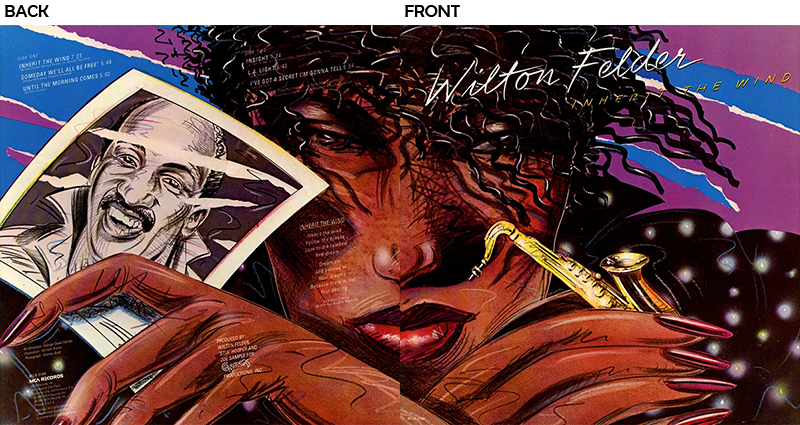
In 1980, Wilton Felder released his third solo album, Inherit the Wind, a statement both musically and emotionally powerful. As saxophonist and bassist for the legendary Crusaders, he proved he was more than just a band member. With this album, he affirmed his musical autonomy and artistic vision. Released on MCA Records, the album exudes jazz-funk with soulful grooves and a touch of eroticism in the melody.
The title track opens the album and features vocals from Bobby Womack. His voice imbues the song with both raw authenticity and spiritual depth. It's a song that lingers. At over seven minutes long, it unfolds like a story whose emotion is inescapable. A cover of Donny Hathaway's "Someday We'll All Be Free" follows, again featuring Womack on vocals. His rendition feels tender and hopeful, a moment of serene reflection between the grooves.
Instrumentally, the album explores a range of styles. Felder glides smoothly between soulful grooves and jazz patterns. On "Until the Morning Comes" and "LA Light," you hear him effortlessly navigate subtle percussion, cool keyboards, and horn arrangements, including work by Joe Sample and drummer Ndugu Chancler. "Insight," with its more pronounced funk, is carried by Wilton Felder Jr.'s vocals, creating a playful contrast to the more subdued pieces.
What sets this album apart is the balance between improvisation and structure. Felder acts as a storyteller without losing himself in virtuosity. The production atmosphere is relaxed yet thoughtful: the instruments breathe; there's space and breath in the arrangements. It's a jazz-funk record with soul mechanics and curves.
In the context of his career, Inherit the Wind falls at the heart of a period in which Felder was solidifying his artistic reputation. He worked closely with Crusaders members Joe Sample and Stix Hooper as producers and played bass and saxophonist himself. The album therefore represents a cohesive artistic endeavor, not a standalone session recording.
Critically, the album garnered praise for its cohesive sound and Bobby Womack's presence at key moments. Recommended tracks like the title track and the Hathaway cover are characterized by their timeless quality.
The listening experience on vinyl is striking for its warm, analog sound. The occasional subtle hiss, the soft pop of the needle, the rich resonance of the bass: this isn't a studio object but a physical experience. Felder's sax seems an extension of the medium. What can sound less technically perfect than digital recordings, gains in authenticity and tangible atmosphere.
A key aspect of this album is how it reflects its time. In the early eighties, jazz was in a transitional phase: traditional forms clashed with new influences from funk, soul, and pop. Felder didn't take sides but built bridges. His music seamlessly connects with the times, without losing his own style. Instead of opting for complex improvisations or commercial simplicity, he explores the space between them. This makes the album feel both timeless and liberating.
The album title itself, Inherit the Wind, seems no coincidence. It suggests a transfer of values, of musical heritage perhaps, but also of experience. Felder already had years of session experience at the time and was known for his playing on both sax and bass. That maturity is evident in every detail. Whether he's playing a riff or stretching a melody line over several bars, it's always subservient, never showy. He relies on calm, on tone, on feeling.
It's that control that gives the album its power. Where some solo projects get bogged down in self-aggrandizement, Felder keeps his course firm yet open. He invites listeners in, rather than overwhelming them. This creates an album that doesn't try to impress, but to communicate.
More than forty years later, Inherit the Wind still sounds fresh and inspiring. The combination of jazz, soul, funk, and gospel warmth makes it a recognizable yet non-stereotypical record. Felder leads a musical dialogue here, both honoring his Crusaders legacy and forging his own path.
Anyone rediscovering this album will find that every song carries promise. It transcends boundaries without clichés. Felder looks ahead, but keeps an eye on melody and emotion. Inherit the Wind is an album that combines experience, flexibility, and character. It's not a work to be simply labeled; it's one to be experienced.
= Full Album Play List =
= Track List =