| Back to Genre |
 |
|
 |
Rating: Average |
Marvin Gaye liked Berry Gordy, and Berry Gordy liked Marvin Gaye. That was enough to get Marvin Gaye signed to Motown Records as a solo artist, even though there was little evidence of his potential at the time; he had sung a bit in a vocal quartet, done a bit of backing for other artists (fun fact – that’s Marvin Gaye over there, with a couple of other guys, doing backing on Chuck Berry’s “Back In The USA” and “Almost Grown”), and done a bit of drumming as a session player on other people’s records. Yet all it took was one fateful meeting with Gordy at his home in December 1960 – a meeting without which we might never have had What’s Going On , because despite his notorious artistic stubbornness and tenacity, Marvin also needed a fair amount of mentoring throughout his life; and for the first decade of his career, he owed a significant debt to both Berry and Anna Gordy (Berry’s older sister, whom he married and who was a mother figure to him for a time). It's not even entirely clear what Berry saw in Marvin during that meeting, other than his charming youthful looks, but who among us wouldn't have envied that kind of intuition?
The greatest irony of Marvin’s first year at Motown, however, is that his and Gordy’s story inverts the classic stereotype of “struggling independent artist carving out his identity against greedy, calculating record executive.” Gordy, who had only just begun to build his company’s image as the poster child for a brand-new pop sound that was both commercially viable and artistically relevant, wanted Marvin to become a living brand for that direction. Marvin, however, was deeply uncomfortable with the idea—not so much because he despised that kind of lowbrow, teen-oriented entertainment, but more because it required a kind of stage presence he wasn’t prepared for. Instead, he insisted on taking a more “adult” route, singing dusty old standards “for adults” in the good old Nat King Cole manner, albeit slightly modernized for a new decade. In other words, the record executive wanted the artist to be hip, modern, and forward-thinking; the artist insisted that the record executive let him be square, old-fashioned, and out of date. And, for the first time, but certainly not the last, the “stubborn kind of fellow” prevailed over the record executive—much to his own chagrin, in the long run.
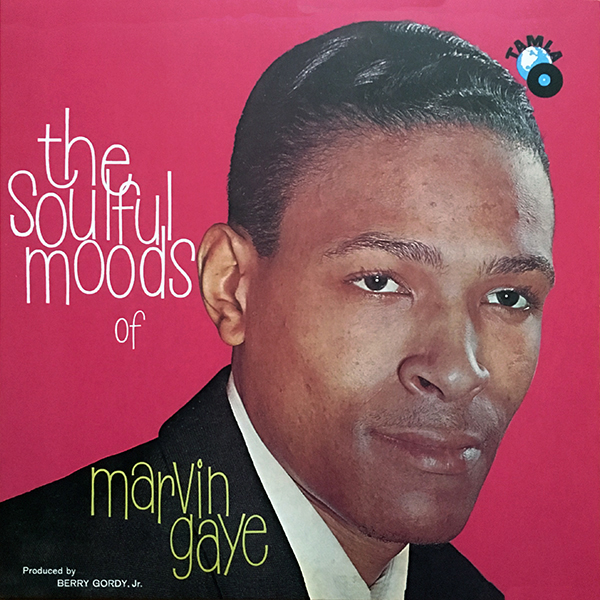
In fact, the lead-up wasn’t that long: Marvin’s first full-length LP for Motown barely managed to grab anyone’s serious attention. Firstly, it clearly wasn’t the right venue: by 1959-60, people had already become accustomed to Tamla/Motown’s early roster of artists – The Miracles, Barrett Strong, Mary Wells, Eddie Holland – and none of them were exactly doing the play-it-again-Sam routine, so a whole Songbook album for Motown would be like Ivo Watts-Russell signing Michael Jackson to 4AD a couple of decades later. Secondly, it clearly wasn’t the right time: the procedure was that you had to become a relevant contemporary hitmaker first, and then please grandma and grandpa later – see both Ray Charles and Sam Cooke, two of Marvin’s main inspirations. Thirdly… the album’s just not very good, you know. It’s as simple as that.
The arrangements are reasonably tasteful, more in the vein of late-night jazz than orchestrated Hollywood mush; Marvin's own piano playing (and occasional drumming) takes centre stage, with light jazzy electric guitar following suit (the credits don't list the actual players, but there are some damn fine and flowing solos on 'Always' and a few other tracks), and the swinging groove can get surprisingly tight and bouncy for a record label least likely to be associated with this kind of genre. But taste isn't enough – you have to back it up with either dazzling virtuosity, which would be too much to ask of Motown's house band, or unique arranging vision, which Berry Gordy couldn't provide. The result is predictable: The Soulful Moods Of Marvin Gaye is pleasant background music that flies in the face of Motown's core values and barely offers a glimpse of the glorious future that Marvin would eventually have at the label.
The only point of mild interest here is Marvin's very first single for the label, thematically and stylistically different from much of the LP, but probably included to fill space or just to give it another chance. 'Let Your Conscience Be Your Guide' is a slow, sentimental blues waltz with a piercing organ melody (to give it a bit of a Ray Charles feel, I think); although written by Gordy especially for Marvin, it still feels more somber and serious than the usual early Motown material like 'Money' or 'Shop Around' – and far more old-fashioned than was necessary for the time. The B-side, “Never Let You Go (Sha-Lu Bop),” is actually more interesting: co-written by Marvin’s longtime manager Harvey Fuqua and Anna Gordy herself, it’s a tricky dance number that combines two different time signatures, a heavily syncopated one in the verse and a straight-up Little Richard-esque boogie-woogie in the chorus – though by this point Marvin’s natural shyness and reticence still prevent him from fully exploiting the song’s potential for excitement.
Ultimately, what remains is mostly historical interest: The Soulful Moods was not only Marvin's first album, it was also the very first LP released on the Motown label (along with Hi We're the Miracles , which reportedly followed a week or so later) – and, stylistically, one of the most unusual LPs you could expect to come out of the Motown label. Knowing that it exists will help you better understand Gaye's complex personality – but owning it probably won't help you better appreciate Gaye as a master interpreter of the songbook.
= Full Album Play List =
= Track List =