| Back to Genre |
 |
|
 |
Rating: Excellent |
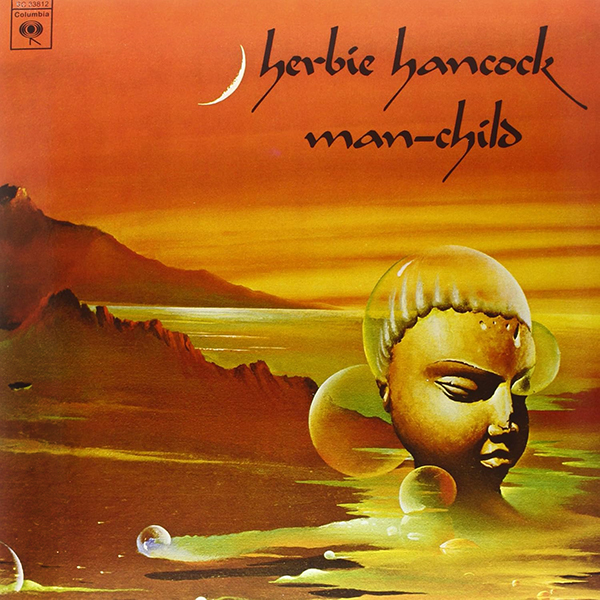
In 1975, Herbie Hancock released Man-Child, one of the most striking and groundbreaking albums of his extensive career. After leaving the Miles Davis Quintet, where he gained fame as an innovative pianist, Hancock began exploring his own path in the world of jazz fusion, embracing electronic instruments and funk rhythms. Man-Child represents a culmination of this exploration, with a blend of technical virtuosity, experimental sounds, and infectious grooves.
The album's title, Man-Child, reflects an interesting dynamic: the balance between playfulness and maturity, both musically and conceptually. The album consists of six tracks, and though instrumental, Hancock manages to evoke complex emotions and imagery with his music.
The album opens with "Hang Up Your Hang Ups," a driving, funky track that immediately sets the tone for the rest of the album. The groove is driven by Paul Jackson's signature bass work and Mike Clark's powerful drums, while Hancock's keyboard playing dances smoothly through the song's layers. This track is a textbook example of Hancock's masterful blend of jazz and funk. The rhythm is tight, the horn arrangements are powerful, and the synthesizers create a futuristic atmosphere that anticipates his later work.
Sun Touch offers a respite after the intense opening track. This track is calmer and more introspective, with a soft, dreamy melody stemming from Hancock's delicate Fender Rhodes playing. The song emphasizes the balance between technical mastery and emotional depth, something Hancock has always excelled at. While Hang Up Your Hang Ups was driven by an energetic groove, Sun Touch is more ethereal and floating, giving the album a beautiful sense of dynamism.
Another standout track on the album is "The Traitor." Hancock clearly showcases his funk roots here, but the song also features complex musical structures that hint at his jazz background. The interplay between the various instruments is captivating, especially the rhythm section, which is capable of sounding both tight and playful. This track has a certain tension and urgency, making it one of the album's most memorable pieces.
"Bubbles," on the other hand, is a lighter, more relaxed track, where the influence of fusion and funk is once again strongly present. It's one of the tracks on the album that feels almost like a soundtrack, with a cinematic quality that transports the listener through various musical landscapes. Hancock's synthesizer work shines here, creating a unique atmosphere, while the rhythmic foundation remains solid.
The album climaxes with "Steppin' in It," a long and funky track that truly showcases Hancock's experimental side. Synthesizers and keyboards come to the forefront again, and Hancock utilizes his electronic arsenal to create complex, layered sounds. The groove is irresistible, and the song moves through various rhythmic patterns without losing its cohesion. What's striking is that, despite his tendency to push the boundaries of jazz and funk, Hancock always maintains a sense of melody and structure. This makes "Steppin' in It" both accessible and experimental—a difficult balance to achieve.
"Heartbeat," the album's closing track, is one of its most striking pieces. It begins with a funky rhythm but quickly evolves into a more complex jazz composition. Here, Hancock demonstrates his mastery of various styles and genres, blending them to create a unique sonic experience. The synthesizers and keyboards propel the song forward, while the horns and percussion lend an almost tribal feel to the groove. This track is a perfect ending to an album that navigates so many musical realms.
What makes Man-Child so special is Hancock's ability to blur the lines between genres. The album is both a tribute to the funk and soul of the '70s and an exploration of the possibilities of jazz and fusion. Hancock's use of synthesizers, his complex rhythmic structures, and his ability to create melodies that are both technically impressive and accessible make Man-Child one of his most groundbreaking works.
The musicians supporting Hancock on this album are all world-class. Paul Jackson (bass), Mike Clark (drums), Bennie Maupin (saxophone), and the horn section give the album a full, rich sound that perfectly complements Hancock's visionary approach. This isn't an album solely about virtuosity—it's also a deeply emotional and musically rich work that invites the listener to discover multiple layers with each listen.
In many ways, Man-Child perfectly exemplifies Hancock's direction during this period: forward-thinking, unpredictable, and always groovy. It's an album that appeals to both jazz and funk enthusiasts, and it remains a high point in his career as a musical innovator.
= Full Album Play List =
= Track List =