| Back to Genre | Biography |
 |
|
 |
Rating: Good |
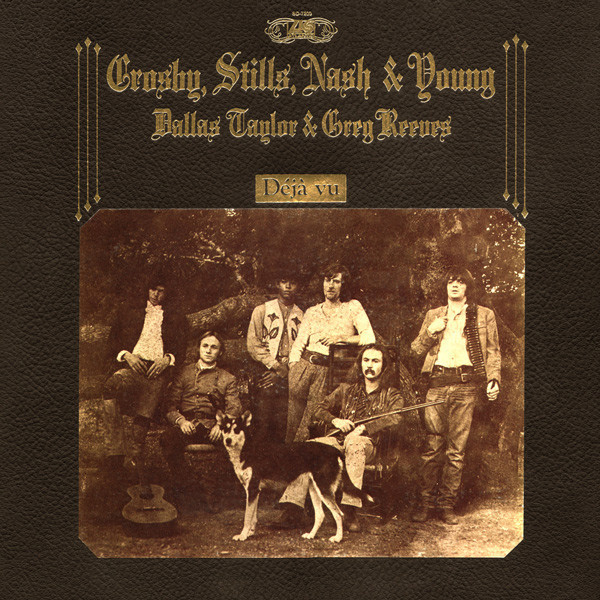
The supergroup Crosby, Stills & Nash, formed in 1968, has undergone various lineups, with Neil Young joining later. In 1970, the quartet released their album Déjà Vu, characterized by its vocal harmonies, long recording time, and the individual qualities of the band members.
The first track, "Carry On," was written by Stephen Stills and features beautiful vocal harmonies between the band members. Short guitar solos alternate with lyrics that address the questions one asks after a loved one has left. We move on in life but look back at the past. The country sounds of "Teach Your Children" form the basis of the song, written by Graham Nash after a photo of a child holding a toy hand grenade. The song addresses the impact on children of news about war and other world events. Once again, the vocals blend together into a warm whole, supported by the sunny guitar notes.
Teach your parents well, their children's hell will slowly go by,
And feed them on your dreams, the one they fix, the one you'll know by.
Don't you ever ask them why, if they told you, you would cry,
So just look at them and sigh and know they love you.
On "Almost Cut My Hair," we hear Neil Young's sharp guitar sound. David Crosby, who wrote the song, propels the lyrics with shouty lines. The rhythmic tones of Crosby's guitar intertwine with Neil Young's, creating a powerful combination that highlights the guitar solos. "Helpless" is sung by Neil Young in the verses, while the other band members provide backing vocals in the chorus. The combination of piano, acoustic guitar, and high-pitched vocals adds to the lyrics. "Woodstock" is an exception on the album because it was written by singer Joni Mitchell, Graham Nash's friend at the time. Despite not being present at the festival, she still tries to capture the festival's atmosphere in the song. The sense of community and joy is evident in C, S, N & Y's version.
By the time we got to Woodstock
We were half a million strong
And everywhere there was song and celebration
The eponymous track, which bears the album's title, has a short musical opening featuring Crosby. The lyrics are delivered in a narrative style and feature a light rhythm on guitars and piano. Compared to the rest of the album, the track stands out somewhat due to its simplicity and soft instrumental sections. On "Our House," the band's strength is evident through a melodic rhythm accompanied by warm vocals. The song explores Nash's relationship with Joni Mitchell, a beautiful ode to love.
Our house is a very, very, very fine house
With two cats in the yard
Life used to be so hard
Now everything is easy
'Cause of you
"4 + 20" isn't well-known among most people, but it's incredibly beautiful in all its simplicity. Stills sings about life and the times when you're feeling down. The sounds of the keyboard and piano provide the backing for "Country Girl." Coming from Neil Young, the album's longest track features vocal harmonies. At times bombastic and captivating, the complex arrangements make it the final track. The album closes with "Everybody I Love You," which opens with a powerful guitar sound and combines rhythmic melodies with simple, short-but-sweet lyrics.
The 1970 album Déjà Vu features exceptionally high-quality harmonies. The combination of completely different voices and instrumentations occasionally creates a complex whole, despite its outwardly ostensible simplicity. Despite this success, the supergroup wouldn't last long as a quartet, but they left behind a worthy piece of music that will go down in history.
= Full Album Play List =
= Track List =


 EN
EN